The Right Way to Dry Your Hair — What the Science Actually Says
Ask ten hairstylists how to blow-dry properly and you'll get ten slightly different rituals. Ask the research, though, and the answer is surprisingly consistent. There is a right way to dry your hair. It's just that almost nobody's arms can actually do it.
What happens to wet hair (and why it matters)
Wet hair isn't just hair with water on it — it's hair in its most fragile state. Each strand absorbs water and swells up to 30% of its diameter. The cuticle, that overlapping shingle layer on the outside, lifts open. Swollen, open, and soft: that's the moment your hair is easiest to damage, whether by rough towel-drying, aggressive brushing, or a nozzle blasting at point-blank range.
There's a second, less famous problem called hygral fatigue. Every time hair swells with water and shrinks as it dries, the internal structure flexes. Do that slowly, over hours of air-drying, day after day, and the repeated swelling can stress the cell membrane complex that holds the cortex together. This is the finding that surprised everyone: a 2011 study in the Annals of Dermatology found that hair dried with a dryer at a proper distance showed less surface damage than hair left to air-dry. Not because heat is good for hair — it isn't — but because spending less time swollen turned out to matter more.
The technique, step by step
1. Blot, never rub. Squeeze water out with a microfiber towel or an old cotton T-shirt. Rubbing lifts and chips the open cuticle. You want your hair damp, not dripping, before any heat touches it — roughly 70% dry is the sweet spot to start.
2. Protect first. A heat protectant isn't marketing. It forms a thin film that slows heat transfer and spreads it more evenly across the strand. Apply it to damp hair, comb it through, done in twenty seconds.
3. Keep your distance: about 15 centimeters. This is the number from the same Korean study — roughly a hand-span between nozzle and hair. At that distance, airflow does the work and surface temperature stays in the safe zone. Press the nozzle against your head and you can push the hair's surface past 100°C, which is where the water inside the strand can flash to steam and blow tiny voids in the cortex. Those show up later as split ends that no product can glue back.
4. Keep it moving. A dryer parked on one spot cooks that spot. Constant, sweeping motion means no single section ever gets hot enough to hurt. Think of it like ironing a shirt — you'd never leave the iron sitting still.
5. Point the airflow down the strand. Cuticles overlap from root to tip, like roof tiles. Blow with the tiles, and they lay flat — that flatness is literally what shine is. Blow against them and you rough the surface up, which reads as frizz.
6. Medium heat, then a cool finish. High heat is for stylists on a deadline. Medium gets you dry nearly as fast with far less risk. And that cool-shot button you've never pressed? It sets the hair's shape and snaps the cuticle closed. Thirty seconds of cool air at the end is the cheapest shine treatment that exists.

Now the honest part: your arms can't do this
Read those six steps again and notice what they quietly demand. One hand holds a dryer at a steady 15 cm — for eight to twelve minutes, elevated at shoulder height. It never drifts closer as it tires (it will). The other hand sections, tensions, and brushes. That's three hands of work assigned to two, one of which is burning out by minute four.
This is why salon results are hard to copy at home. Your stylist isn't more magical than you; they're standing behind your head with both elbows at a comfortable height and their whole body free to move. You're in front of a mirror with one arm overhead, going numb.
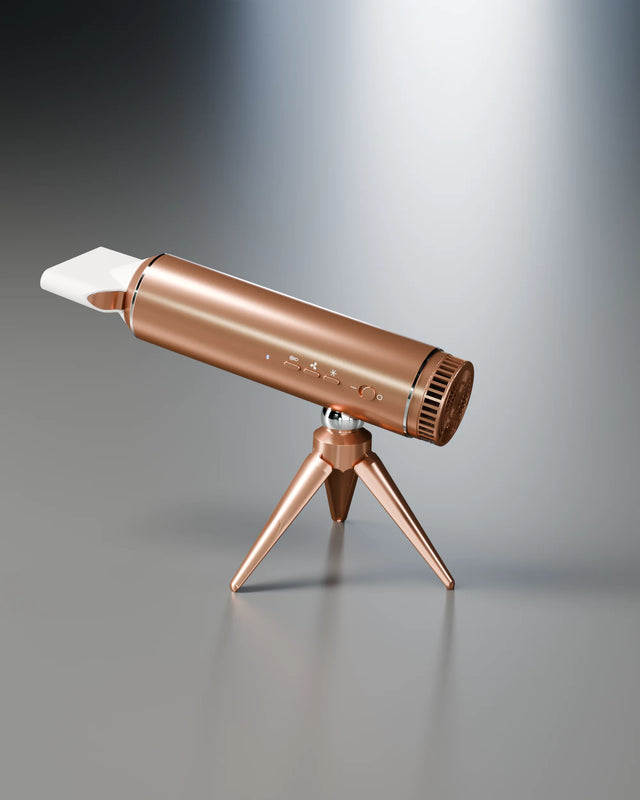
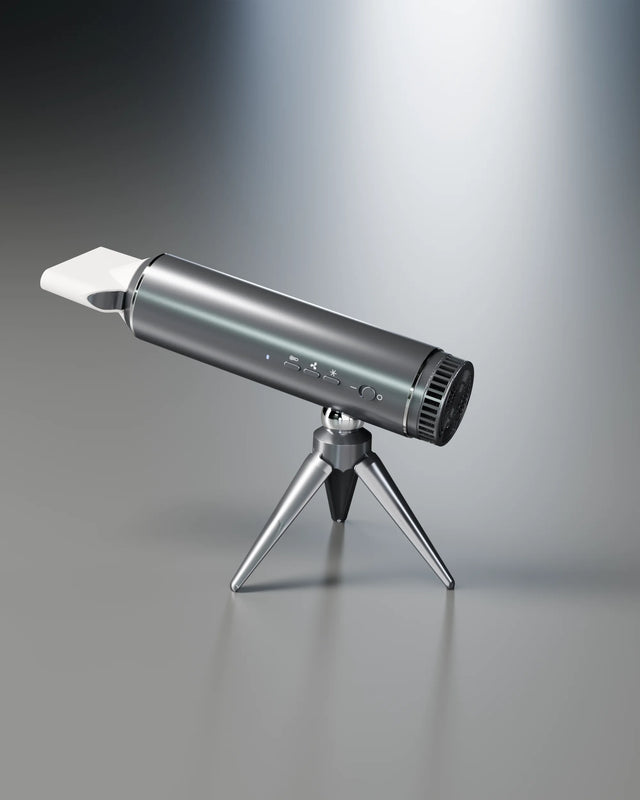
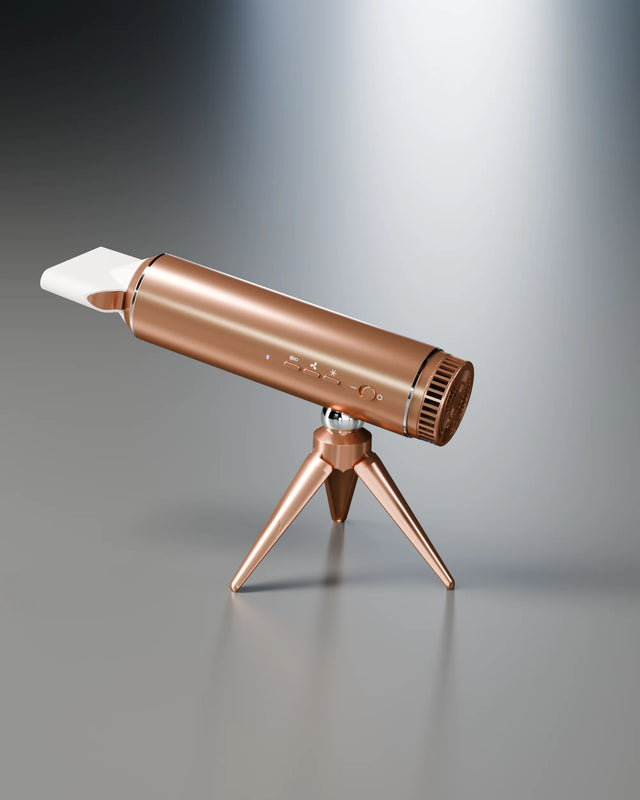
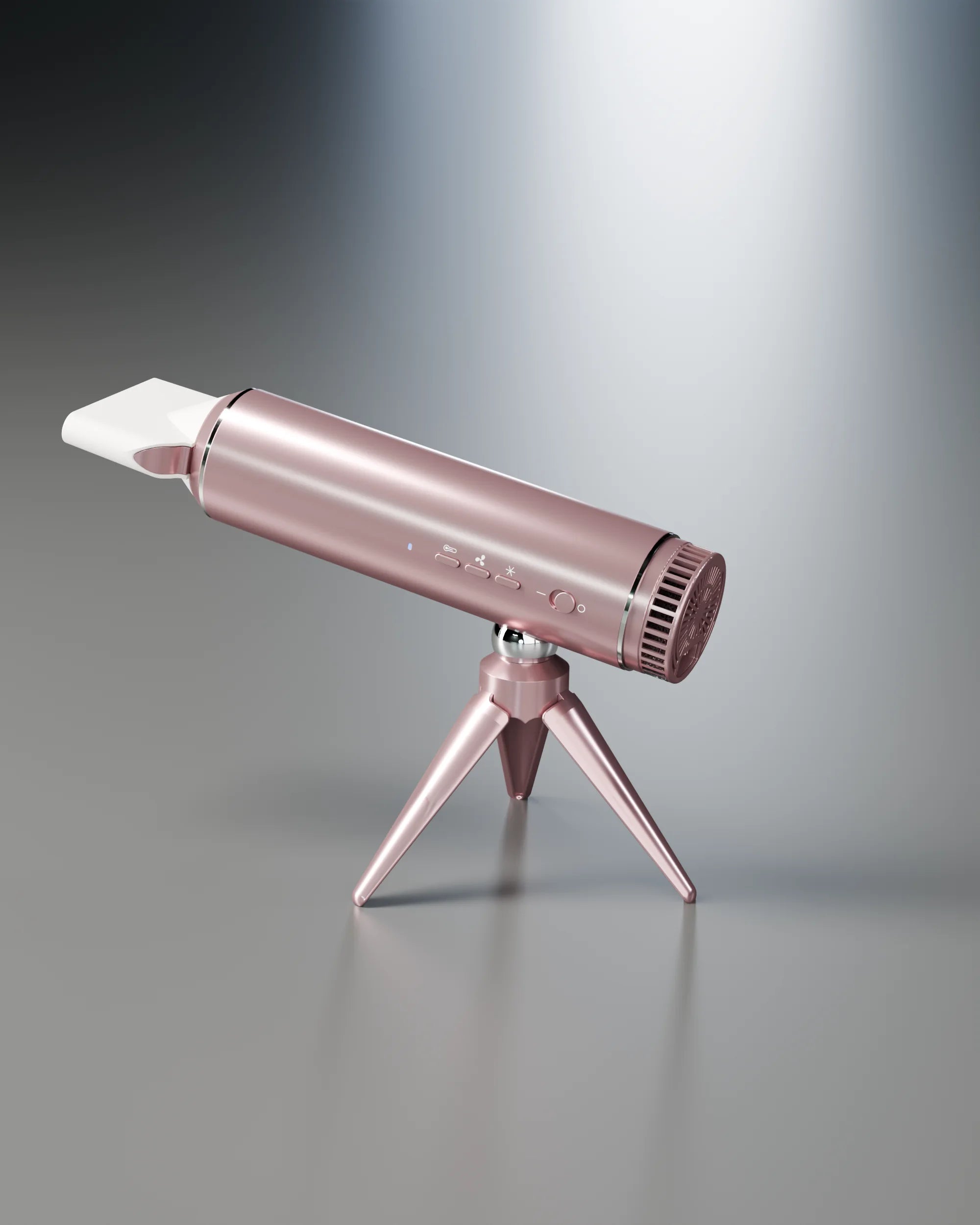
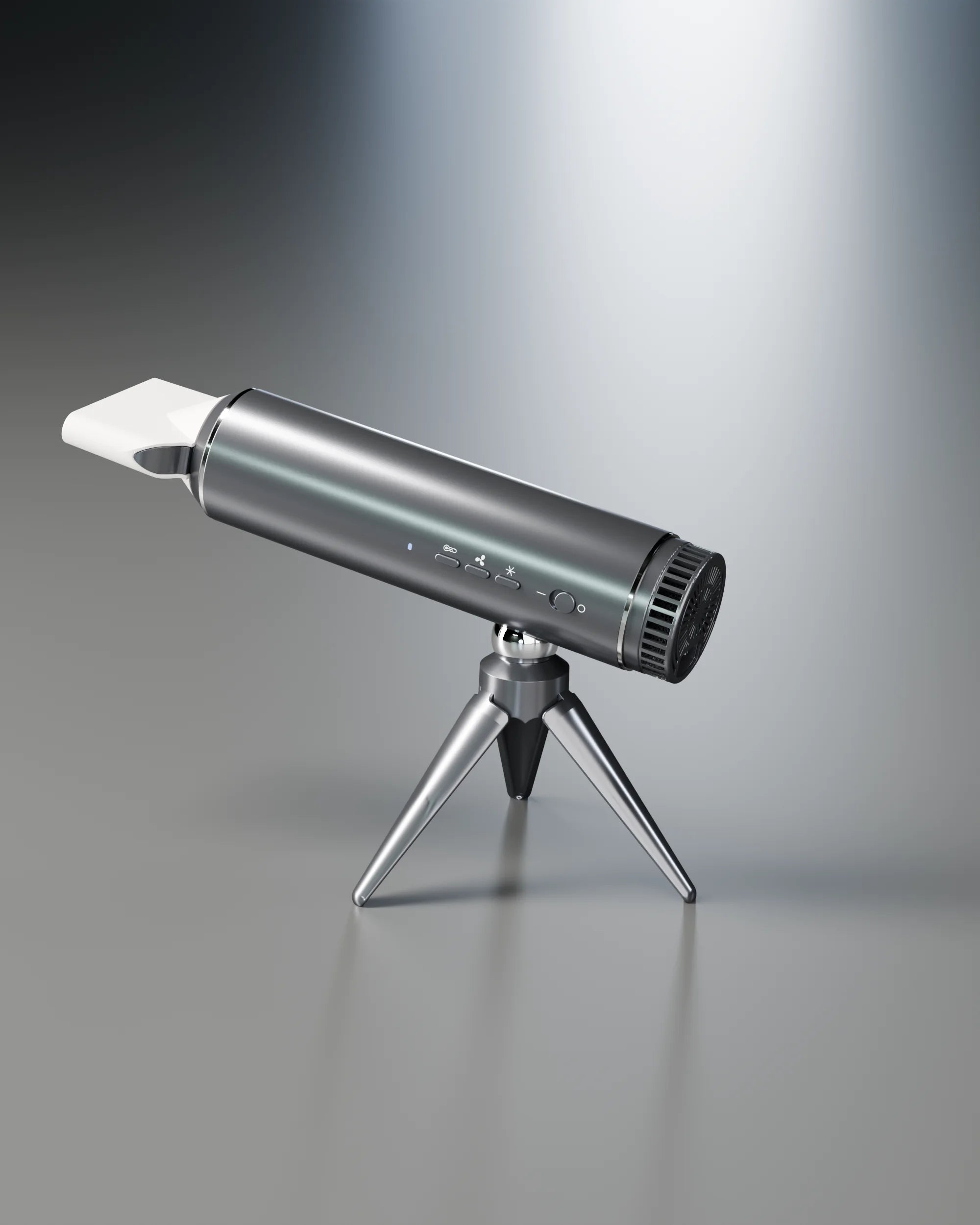
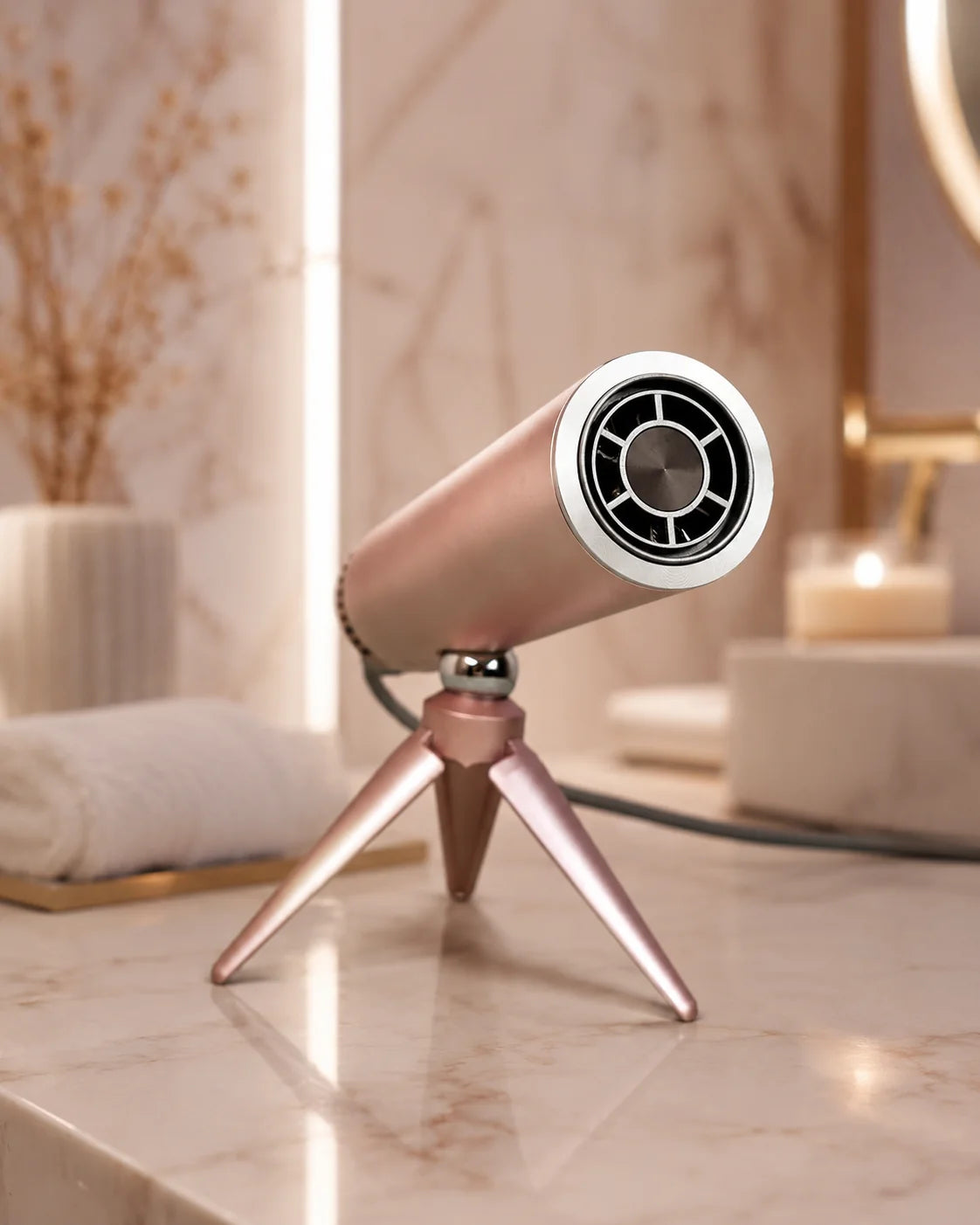
It's also why we became fans of mounting the dryer instead of holding it. Fix a dryer on a stand — like the LUNAR hands-free dryer we test our guides with — and every hard part of the technique becomes trivial. The distance stays at 15 cm because nothing is getting tired. The angle stays down-the-strand because you set it once. And both of your hands are suddenly free to do the part that actually needs hands: sectioning, tension, the round brush.
You move your head through the airflow instead of chasing your head with the dryer. It sounds backwards until you try it, and then it feels obvious.
The short version
Blot gently, protect, stay a hand-span away, keep the air moving and pointed down the strand, use medium heat, finish cold. That's the whole science. The only thing standing between you and doing it every day is anatomy — and that part, at least, is solvable.